The modern culinary landscape for high-volume food production demands a precarious balance between speed, nutritional preservation, and consistent quality. The Steam Oven(10 Pots) emerges as a pivotal solution for commercial kitchens, offering a specialized steaming capacity that allows for the simultaneous preparation of multiple batches without compromising the integrity of the ingredients.
Globally, the shift toward healthier eating habits has increased the demand for steamed foods, which retain more vitamins and minerals compared to frying or boiling. By integrating a Steam Oven(10 Pots) into a professional workflow, catering businesses can scale their operations, reducing labor costs while ensuring that every dish meets strict industrial health standards.
Understanding the technical nuances of this equipment—from its thermal distribution to its energy-efficient water management—is essential for any facility manager aiming to optimize their "Large Gravity Kitchen" or food processing line. Whether in a hospital, a school, or a commercial catering hub, the right steaming configuration determines the throughput and quality of the final product.
Global Industry Context of Steam Oven(10 Pots)
In the current global food service market, the pressure to deliver large quantities of nutrient-dense meals has never been higher. According to industry trends aligned with ISO food safety standards, the adoption of precision steaming equipment is rising as urban populations grow and institutional catering (schools, hospitals, military) expands. The Steam Oven(10 Pots) addresses the critical bottleneck of "batch-processing," where traditional ovens fail to maintain uniform moisture across large volumes.
The primary challenge facing industrial kitchens today is the waste of energy and ingredients caused by uneven heating. By utilizing a multi-pot configuration, the Steam Oven(10 Pots) ensures that thermal energy is distributed evenly via saturated steam, eliminating cold spots and reducing the overall cooking time per unit. This efficiency is vital for meeting the stringent timelines of modern commercial food production.
Defining the Steam Oven(10 Pots) Utility
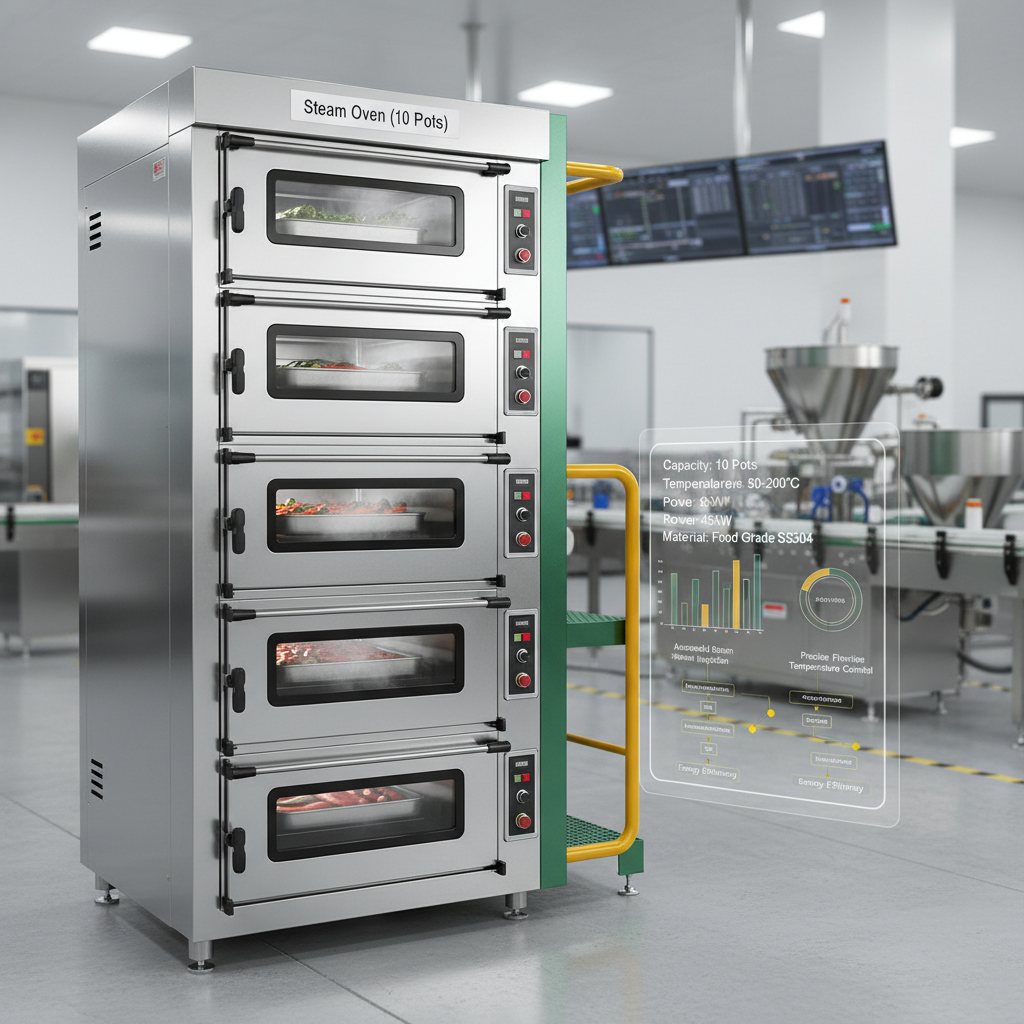
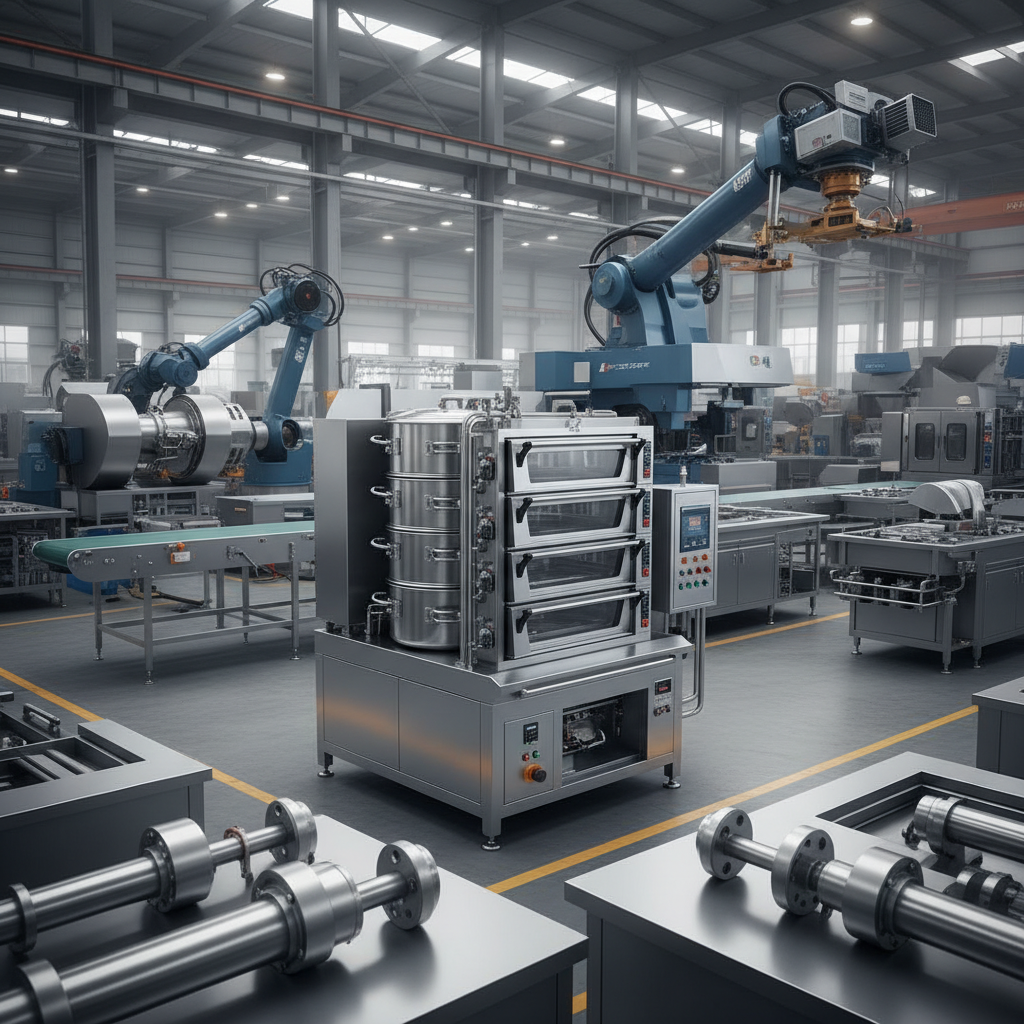
At its core, the Steam Oven(10 Pots) is a heavy-duty industrial appliance designed to house ten separate steaming vessels within a single, insulated thermal chamber. Unlike domestic steamers, this system uses a high-pressure steam generator to create a consistent environment where heat is transferred rapidly and uniformly to the food, regardless of the pot's position in the rack.
This equipment is a cornerstone of "Food Processing Equipment," bridging the gap between artisanal cooking and mass production. By allowing for ten distinct recipes or batches to be steamed simultaneously, it provides an unparalleled level of versatility. For example, a kitchen can steam vegetables in four pots, dim sum in four others, and fish in the remaining two, all within one cycle.
Beyond simple cooking, the Steam Oven(10 Pots) serves a humanitarian and industrial need by drastically reducing the fuel or electricity required to heat multiple individual pots on a stove. This consolidation of heat sources makes it an indispensable tool for organizations operating in resource-constrained environments or high-traffic commercial zones.
Core Components for Maximum Durability
The structural integrity of the Steam Oven(10 Pots) relies on the use of high-grade 304 stainless steel. This material is selected not only for its resistance to corrosion in high-humidity environments but also for its ability to maintain hygiene standards required by global health certifications. The chassis is designed to withstand the constant expansion and contraction associated with extreme temperature shifts.
A critical internal component of the Steam Oven(10 Pots) is the precision steam distribution manifold. This system ensures that steam is injected evenly across all ten levels, preventing the common issue where pots at the bottom are overcooked while those at the top remain underdone. Advanced gaskets and sealing rings further ensure that no heat escapes, maximizing thermal efficiency.
Furthermore, the control system of the Steam Oven(10 Pots) often integrates intelligent sensors that monitor internal pressure and temperature in real-time. This automation reduces the need for constant manual supervision, allowing kitchen staff to focus on preparation while the machine handles the delicate physics of steam saturation, ensuring a consistent result every single time.
Scalability and Operational Efficiency
When evaluating the capacity of a commercial kitchen, scalability is the most important metric. The Steam Oven(10 Pots) allows an operator to increase their output tenfold compared to single-pot steaming without increasing the physical footprint of the cooking area. This spatial efficiency is crucial in expensive urban real estate where every square meter of the "Catering Kitchen Equipment" layout must be optimized.
Operational efficiency is further enhanced by the reduction in cleaning time and water waste. By centralizing the steaming process into one Steam Oven(10 Pots), the facility can implement a streamlined drainage and cleaning protocol, reducing the labor hours spent on maintenance and ensuring that the kitchen remains compliant with HACCP guidelines.
Comparative Performance Analysis of Steam Oven(10 Pots) Configurations
Real-World Global Applications
In the hospitality sector of Southeast Asia, the Steam Oven(10 Pots) is widely utilized in large-scale dim sum production. The ability to maintain a precise humidity level across ten different pots ensures that the delicate textures of dumplings and buns are preserved, preventing the skin from drying out—a common failure in standard convection ovens.
Beyond the commercial sector, these units are critical in remote industrial zones, such as mining camps or oil rigs, where centralized dining halls must serve thousands of workers daily. The Steam Oven(10 Pots) provides a reliable, safe, and fast way to prepare bulk quantities of nutritious food while minimizing the risk of fire associated with open-flame cooking in confined industrial spaces.
Long-Term Value and Sustainability
Investing in a Steam Oven(10 Pots) offers significant long-term financial advantages. By reducing the energy required to boil water in ten separate pots on a range, the cumulative energy savings over a five-year period can be substantial. This not only lowers operational overhead but also aligns the business with global sustainability goals to reduce carbon footprints in the food industry.
From a social impact perspective, the reliability of this equipment ensures food security and dignity in institutional settings. In hospitals, for instance, the ability to quickly produce a variety of steamed, dietary-specific meals across ten pots means patients receive fresh, high-quality nutrition without the delays often caused by limited equipment capacity.
Furthermore, the durability of the stainless steel construction means that the Steam Oven(10 Pots) has a long lifecycle. With minimal maintenance, these machines avoid the "planned obsolescence" of cheaper alternatives, providing a stable asset that grows in value as it enables the business to take on larger contracts and higher volumes.
Future Innovations in Steaming Technology
The next generation of the Steam Oven(10 Pots) is moving toward complete digital transformation. We are seeing the integration of IoT (Internet of Things) sensors that allow chefs to monitor the internal temperature and steam pressure of all ten pots from a smartphone or tablet. This "smart steaming" approach eliminates guesswork and reduces food waste by alerting staff the moment a batch reaches its optimal temperature.
Sustainability is also driving the development of hybrid energy sources. Future models of the Steam Oven(10 Pots) may utilize heat recovery systems that capture waste steam and repurpose it to pre-heat incoming water, further slashing energy consumption. The transition toward green energy certificates for kitchen equipment is making these innovations a requirement rather than a luxury.
Finally, automation in loading and unloading is on the horizon. Imagine a Steam Oven(10 Pots) integrated with a robotic arm system that can slide pots in and out based on a programmed timer. This evolution will further reduce labor costs and increase the safety of kitchen staff by minimizing exposure to high-temperature steam.
Core Technical Comparison and Impact of Steam Oven(10 Pots) Implementation
|
Configuration Type
|
Energy Efficiency (1-10)
|
Production Capacity
|
Maintenance Requirement
|
|
Steam Oven(10 Pots) Standard
|
7
|
High (10 batches)
|
Low
|
|
Steam Oven(10 Pots) Digital
|
9
|
Very High (Precise)
|
Moderate
|
|
Steam Oven(10 Pots) Hybrid
|
10
|
High (Eco-optimized)
|
Moderate
|
|
Traditional Range Steaming
|
3
|
Low (Single batch)
|
High
|
|
Steam Oven(10 Pots) Industrial
|
8
|
Maximum (Bulk)
|
Low
|
|
Steam Oven(10 Pots) Compact
|
6
|
Medium
|
Very Low
|
FAQS
The Steam Oven(10 Pots) uses a specialized steam distribution manifold and a pressurized chamber. Instead of relying on rising steam from a single source, it forces saturated steam through strategically placed vents, ensuring that the thermal energy reaches every pot simultaneously. This prevents the "gradient effect" where bottom pots overcook while top pots remain raw, delivering professional consistency across all ten batches.
Yes, significantly. By consolidating ten separate cooking processes into one insulated environment, the Steam Oven(10 Pots) reduces heat loss to the surrounding air. It requires far less energy to maintain a steam-filled chamber than it does to boil water in ten individual pots on a gas or electric range, leading to lower utility bills and a reduced carbon footprint for the facility.
Our Steam Oven(10 Pots) is constructed primarily from high-grade AISI 304 stainless steel. This specific alloy is chosen for its exceptional resistance to oxidation and corrosion, which is critical given the constant exposure to high-temperature water vapor. This ensures the machine remains hygienic, durable, and compliant with international food safety standards for decades.
Absolutely. Because the Steam Oven(10 Pots) utilizes ten individual pots, you can steam a diverse array of foods—such as seafood, vegetables, and grains—simultaneously. Since each pot is sealed and the steam is the medium of heat, there is no flavor transfer between pots, allowing for maximum menu flexibility in a single cooking cycle.
Cleaning is streamlined due to the stainless steel interior and integrated drainage systems. Most operators find that a daily rinse-down takes less than 15 minutes. Because the unit prevents grease splatter common in frying or roasting, the maintenance is primarily focused on descaling the steam generator, which can be automated in higher-end models.
With proper maintenance and descaling, a professional Steam Oven(10 Pots) typically lasts between 10 to 15 years. The use of industrial-grade components and the simplicity of the steaming mechanism make it one of the most durable pieces of equipment in a commercial kitchen, providing a high return on investment over its operational life.
Conclusion
The Steam Oven(10 Pots) represents more than just a capacity upgrade; it is a strategic investment in operational excellence. By combining high-volume throughput with the nutritional benefits of precision steaming, it solves the critical challenge of scaling quality in commercial food production. From its durable stainless steel construction to its energy-efficient design, every aspect of the system is engineered to support the rigorous demands of modern catering.
As the industry moves toward a future defined by automation and green energy, the Steam Oven(10 Pots) will continue to evolve, integrating smarter controls and more sustainable heating methods. For business owners looking to optimize their kitchen workflow and enhance food quality, adopting this technology is a definitive step toward long-term success. Visit our website to learn more: www.smartfoodheat.com