Industrial Food Processing Solutions for South Africa Advanced Planetary Mixing Cooking Machine
  • Home
  • Global Service
  • Industrial Food Processing Solutions for South Africa Advanced Planetary Mixing Cooking Machine

Industrial Food Processing Solutions for South Africa: Advanced Planetary Mixing Cooking Machine

Empowering South African food manufacturers with high-precision thermal mixing technology to enhance production efficiency and product consistency across the region.

Industrial Food Processing Solutions for South Africa: Advanced Planetary Mixing Cooking Machine

Integrating high-torque planetary agitation with precision heating to solve the most challenging viscosity and temperature control issues in South African food production.

The Landscape of Food Equipment Manufacturing in South Africa

Analyzing the intersection of industrialization and food processing needs in the Southern African hub.

South Africa's food processing sector operates within a unique economic climate characterized by a strong drive toward industrialization and a diverse consumer base. The demand for Food Automatic Mixers has surged as local producers shift from artisanal batches to scalable commercial volumes to meet the growing urban demand in cities like Johannesburg and Cape Town.

Environmental factors, including fluctuating energy costs and the need for water-efficient processes, have pushed manufacturers toward more energy-efficient heating systems. Many facilities are currently upgrading their legacy hardware to integrate Fast Food Automation Machine systems to reduce labor dependency and ensure strict adherence to international food safety standards.

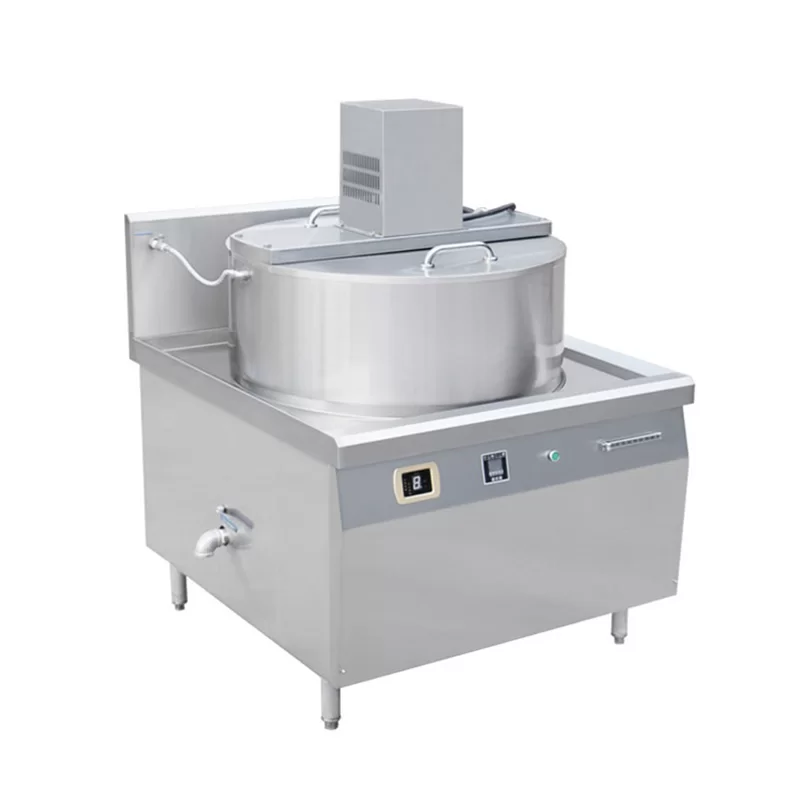
Furthermore, the regional focus on value-added agriculture—turning raw crops into processed goods—requires specialized equipment. The adoption of the Planetary Mixing Pot has become critical for producing high-viscosity sauces and traditional South African condiments that require uniform heat distribution without scorching.
Evolution and Technological Trajectory of Mixing Equipment

From manual agitation to the era of intelligent automation in South African factories.

Market Development History

Between 1990 and 2010, the South African food industry relied heavily on basic steam-jacketed kettles with manual stirring. These systems often suffered from "hot spots," leading to inconsistent product quality and significant waste in candy and sauce production.

From 2010 to 2020, a transition occurred toward semi-automation. The introduction of the Automatic Agitating Candy Cooker marked a turning point, allowing confectionery producers to control temperature profiles digitally, which significantly improved the texture and shelf-life of locally produced sweets.

Since 2020, the market has entered the "Smart Manufacturing" phase. The focus has shifted toward integrated planetary systems that combine mixing, cooking, and lifting in one unit, reducing the risk of contamination and drastically cutting down processing time.

Future Development Trends

IoT-Driven Process Monitoring

Integration of sensors to track viscosity and temperature in real-time, allowing South African plant managers to monitor batches remotely via cloud-based dashboards.

Sustainable Energy Integration

A move toward hybrid heating systems that can utilize solar-thermal energy, reducing the reliance on the national grid during peak load shedding periods.

High-Precision Customization

The rise of modular equipment designs that allow factories to switch between different food products quickly, adapting to the volatile consumer trends in the African market.

Industry Trends and Future Outlook

Predicting the next 3-5 years of food machinery innovation in South Africa.

Hyper-Automation Integration
Replacing manual transfer steps with fully synchronized conveyor systems and automated dosing units.
AI-Based Recipe Control
Implementing machine learning to adjust mixing speeds based on real-time viscosity feedback for perfect batches.
Eco-Friendly Heating
Adoption of high-efficiency induction heating to reduce carbon footprints in South African industrial parks.
Sanitary Design 4.0
Advanced CIP (Clean-in-Place) systems integrated into planetary mixers to minimize downtime and waste.

Industry Outlook

Based on Google search trends within the Southern African region, there is a marked increase in queries regarding "automation in food processing" and "energy-efficient industrial cookers." This indicates that the local market is moving away from simple equipment toward integrated, intelligent systems that can optimize operational costs.

We expect a significant shift toward "micro-factories"—smaller, highly automated production units located closer to urban centers. This will drive the demand for compact yet powerful Food Automatic Mixers that offer the same precision as large-scale industrial plants.

Localized Application Scenarios in South Africa

Real-world implementation of advanced mixing technology across diverse South African food sectors.

01. Industrial Jam and Preserve Production

Using the Planetary Mixing Pot to process local fruits into high-quality preserves, ensuring uniform pectin distribution and preventing fruit degradation through precise temperature control.

02. Commercial Confectionery Manufacturing

Deployment of the Automatic Agitating Candy Cooker for mass-producing traditional hard candies and caramels, eliminating the risk of burning sugar in large batches.

03. Fast-Casual Restaurant Chain Central Kitchens

Implementing Fast Food Automation Machine systems to prepare standardized sauces and gravies, ensuring the same taste profile across multiple outlets in Cape Town and Durban.

04. Specialized Baby Food Production

Utilizing Food Automatic Mixers with high-grade stainless steel and sanitary seals to produce nutrient-dense, smooth purees that meet strict health regulations.

05. Artisanal Mayo and Dressing Plants

Applying the Planetary Mixing Cooking Machine to achieve perfect emulsification of oils and acids for gourmet dressings, catering to the growing organic food market in South Africa.

Brand Story

Global Development History of Dongguan Maxsen Electronic Co., Ltd.

Foundational Innovation

Maxsen began with a vision to solve the inefficiency of manual thermal mixing, focusing on the engineering of high-precision planetary gears for food-grade equipment.

Technological Breakthrough

We pioneered the integration of PLC digital control systems into our mixing pots, allowing users to program complex temperature and speed curves for the first time.

Global Market Expansion

Expanding beyond Asia, we tailored our machines for the African market, focusing on durability, ease of maintenance, and energy efficiency to suit local infrastructure.

Commitment to Quality

Achieving international certifications, we ensured every piece of equipment meets the most rigorous sanitary standards required for global food export.

Future-Ready Vision

Today, Maxsen continues to lead in "Smart Mixing" technology, aiming to eliminate food waste through precision engineering and automated thermal control.

Complete Equipment Portfolio for South African Producers

A comprehensive range of automated solutions designed for the unique demands of the Southern African food industry.

Frequently Asked Questions in South Africa

Expert answers to the most common technical and operational queries from our local clients.

How does a Planetary Mixing Pot handle high-viscosity African food pastes?

The planetary motion ensures that the agitator travels through every part of the pot, preventing "dead zones" and ensuring that thick pastes are mixed uniformly without requiring manual intervention.

Can Food Automatic Mixers be integrated into existing production lines in Johannesburg?

Yes, our systems are designed with modular interfaces and standard PLC protocols, allowing them to be easily integrated with existing conveyors and packaging machinery.

What is the energy efficiency of a Planetary Mixing Cooking Machine during power fluctuations?

Our machines utilize high-efficiency heating elements and variable frequency drives (VFDs) that stabilize power consumption and can be paired with voltage regulators to protect against surges.

How do I maintain an Automatic Agitating Candy Cooker in high-humidity coastal areas?

We use SUS304 or SUS316L stainless steel to prevent corrosion. Regular lubrication of the planetary gears and following our CIP guidelines ensure longevity in coastal climates like Durban.

What are the benefits of a Fast Food Automation Machine for scaling a franchise?

Automation ensures that the recipe is executed identically in every branch, reducing training time for staff and eliminating human error in temperature and mixing duration.

What lead times should I expect for customized planetary mixers delivered to South Africa?

Standard units are shipped rapidly, while customized configurations typically take 4-6 weeks for manufacturing and testing before being dispatched via secure sea or air freight.

Ready to Automate Your Production?

Consult with our experts to find the perfect mixing and cooking solution for your facility in South Africa.

Contact Us Now

If you are interested in our products, you can choose to leave your information here, and we will be in touch with you shortly.